
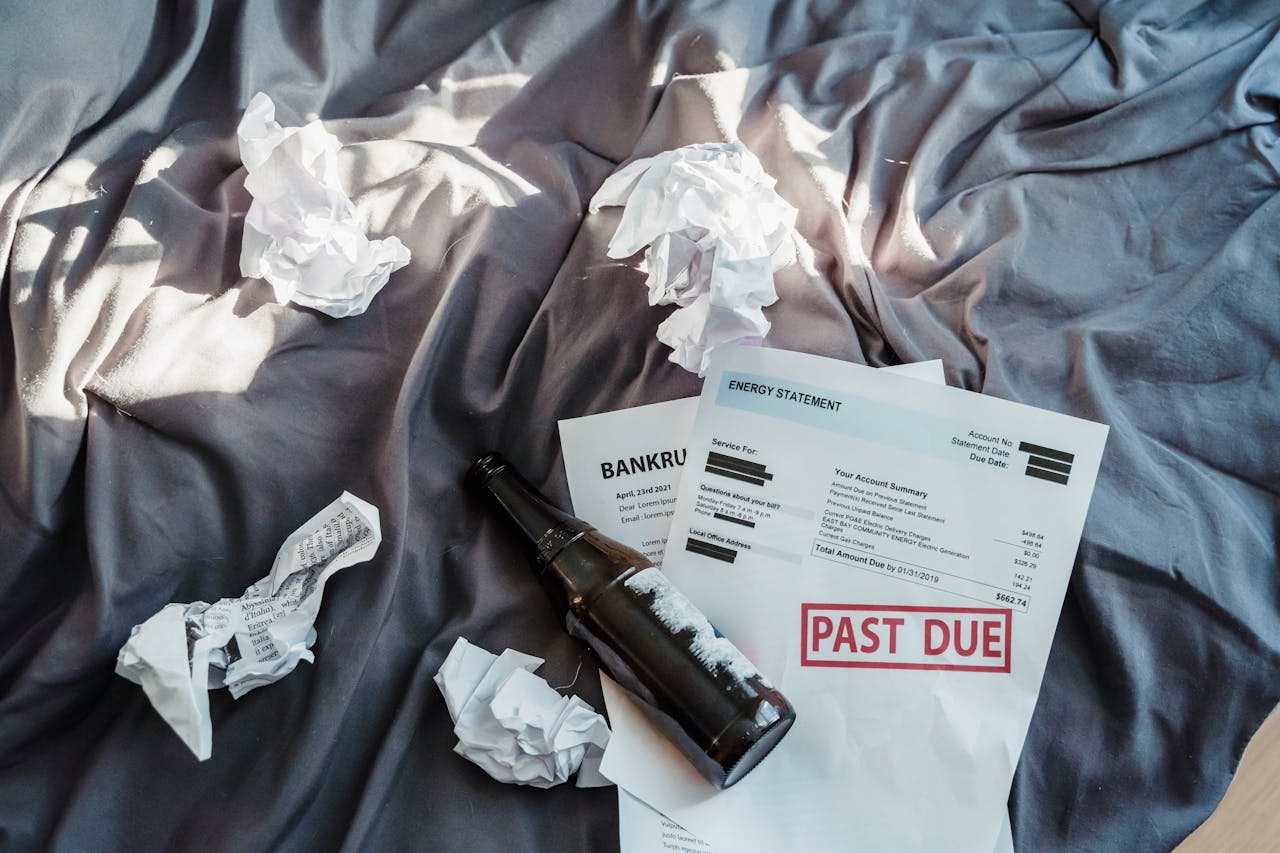

Bankruptcy Transaction Attorneys New York

Chapter 7 Bankruptcy Process

Bankruptcy Practice of Robert Aronov, Esq. has experienced great success, with closing over several thousand transactions. Robert Aronov & Associates, P.C. counsels clients in all areas of bankruptcy law.

Manhattan Office
315 Madison Avenue
Suite 901
New York, NY 10017
Tel.(877) 529-6699
Fax.(718) 206-1227
<< MAP >>  << Email >>

We also have offices in:
(click for directions)

Richmond Hill, NY - Main Office
88-02 136 Street
Richmond Hill, NY 11418
Tel: (877) 529-6699
Fax.(718) 206-1227
<< MAP >>  << Email >>
Rego Park, NY Office
98-14 Queens Blvd
Rego Park, NY 11374
Tel.(877) 529-6699
Fax.(718) 206-1227
<< MAP >>  << Email >>
Fresh Meadows, NY Office
185-19 Union Trpk
Fresh Meadows, NY 11366
TEL.(877) 529-6699
FAX. (718) 206-1227
<< MAP >>  << Email >>
Brooklyn, NY Office
1635 E. 19th St
Brooklyn, NY 11229
TEL.(877) 529-6699
FAX. (718) 206-1227
<< MAP >>  << Email >>

bankruptcy agentHis clientele spans the New York City area, including Manhattan, Brooklyn, Queens, Bronx, Staten Island, and Suffolk and Nassau counties.

Bankruptcy Transaction Services

Law Firm of Robert Aronov & Associates, P.C. will protect your rights and will use its experience to further your interests to keep you one step ahead of your competition.

What is bankruptcy?

Bankruptcy is the legal method for a debtor to discharge or relieve debt. Bankruptcy is a way for people or a business who owe more money than they can pay to either work out a plan to repay the money over time or to have their debt wiped out. While no debtor is guaranteed a total discharge, most debtors who file for bankruptcy are given such relief. One of the primary purposes of the bankruptcy act is to relieve the honest debtor from the weight of oppressive indebtedness and to provide the debtor with a fresh start. Title 11 of the United States Code regulates the filing of a bankruptcy. If the debtor initiates the bankruptcy it is called a voluntary bankruptcy. If the creditor initiates the bankruptcy it is called an involuntary bankruptcy. In an involuntary bankruptcy the debtor has the opportunity to contest the petition. While the debtor is either working out a plan or the trustee is gathering the available assets to sell, the Bankruptcy Code provides that creditors must stop all collection efforts against the debtor. The Bankruptcy Code regulates what chapter you must file under, what bills can be eliminated, how long payments may be extended, what possessions you may keep, and all other details concerning the bankruptcy.

Back to top

What is a chapter 7 bankruptcy?

Chapter 7 is the liquidation chapter of the Bankruptcy Code. Chapter 7 cases are commonly referred to as straight bankruptcy or liquidation cases, and may be filed by an individual, corporation, or a partnership. Under chapter 7, a trustee is appointed to collect and sell all property that is not exempt and to use any proceeds to pay creditors. In the case of an individual, the debtor is allowed to claim certain property exempt. In exchange for this, the debtor gets a discharge, which means that the debtor does not have to pay certain types of debts. Corporations and partnerships do not receive discharges. Consequently, any individuals legally liable for the partnership`s or corporation`s debts will remain liable. Therefore, individual bankruptcies may be required as well as the corporation or partnership bankruptcy.

In a chapter 7 case involving an individual debtor, the creditors generally have sixty (60) days from the first date set for the meeting of creditors to object to the discharge of the debtor and/or the dischargeability of a specific debt. If the deadline passes without any objections to the debtor`s discharge being filed, the court will issue the discharge order. If any objections to the dischargeability of specific debts are filed, they will be heard by the court, but will not delay thegranting of a discharge with respect to other debts. An objection to discharge or to the dischargeability of certain debts is considered a separate lawsuit (an adversary proceeding) within the bankruptcy and may result in a trial before the judge assigned to the case. Corporate and partnership chapter 7 debtors do not receive discharges. If there are no assets from which creditors can be paid, the trustee will prepare a report of no distribution and the case will be closed. If there are assets that are not exempt, funds will be available for distribution to creditors. The court will set claims deadlines and notify all creditors to file their claims. The trustee will proceed to collect the assets, liquidate them and distribute the proceeds to creditors. When the assets have been completely administered, the court will close the case.

Back to top

What is a reaffirmation agreement?

A reaffirmation agreement is an agreement by which a bankruptcy debtor becomes legally obligated to pay all or a portion of an otherwise dischargeable debt. Such an agreement must generally be filed within sixty (60) days after the first date set for the meeting of creditors. If the reaffirming debtor is not represented by an attorney, the debtor or creditor must file an application for approval of the agreement, along with a request for hearing. You must appear in person at the hearing. The judge will ask you questions to determine whether the reaffirmationagreement imposes an undue burden on you or your dependents and whether it is in your best interests. Since reaffirmed debts are not discharged, the bankruptcy court will normally only reaffirm secured debts where the collateral is important to your daily activities. Reaffirmation agreements are strictly voluntary. They are not required by the Bankruptcy Code or other state or federal law. You can voluntarily repay any debt instead of signing a reaffirmation agreement, but there may be valid reasons for wanting to reaffirm a particular debt. Since a reaffirmation agreement takes away some of the effectiveness of your discharge, legal counsel is advisable before agreeing to a reaffirmation. Even if you sign a reaffirmation agreement, you have a minimum of sixty (60) days after the agreement is filed with the court to change your mind. If your discharge date is more than sixty (60) days after the agreement is filed with the court, you have until your discharge date to change your mind. If you reaffirm a debt and fail to make the payments as agreed, the creditor can take action against you to recover any property that was given as security for the loan and you may remain personally liable for any remaining debt.

Back to top

What is redemption?

Redemption allows an individual debtor (not a partnership or a corporation) to keep tangible, personal property intended primarily for personal, family, or household use. The debtor must pay the holder of a lien on the property the amount of the allowed secured claim on the property, which typically means the value of the property. Otherwise, in order to retain the property, the debtor would have to pay the entire amount of the secured creditor`s debt, do a reaffirmation agreement and become legally obligated on the debt again. The property redeemed must be claimed as exempt or abandoned. With redemption, a debtor can often get liens released on personal household possessions for much less than the underlying debt on those secured possessions. Unless the creditor consents to periodic payments, redemption must generally be made in one lump sum payment to the creditor.

Back to top

What does it mean if a case is dismissed?

A dismissal order ends the case. Upon dismissal the automatic stay ends and creditors may start to collect debts, unless a discharge is entered before the dismissal and is not revoked. An order of dismissal itself will not free the debtor from any debt. Often, a case is dismissed when the debtor fails to do something that is required (such as show up for the creditors` meeting, answer the trustee`s questions honestly, produce books and records the trustee requests), or if it is in the best interests of the creditors. Unless the debtor appeals the order or seeks reconsideration of the order within ten (10) days after entry of the order, the Clerk will automatically close the case.

Make sure you do not attempt to conceal your property, destroy any financial records, violate any court order or make enormous, last minute charges on your credit cards. Doing these things might get your case dismissed!

Before filing your Chapter 7 petition, you must:

meet with your bankruptcy attorney and provide the necessary information for completion of the petition and schedules, including a list of your current personal property and its value, a list of creditors whom you owe and any payments you have made to them, information on employment or other income, and other information that your bankruptcy lawyer will ask you to provide complete a U.S. Trustee approved Credit Counseling Briefing and give the completion certificate to your attorney to file with your petition.

After you have completed these tasks, your bankruptcy lawyer will file the petition and credit counseling certificate with the bankruptcy court.

Back to top

After I File My Bankruptcy Petition What Should I do?

Your bankruptcy attorney has filed your bankruptcy petition, you might be thinking if that's all there is to it. There are more steps that you must take to ensure that your bankruptcy petition is properly filed and that you are complying with the procedures required by the bankruptcy court.

When you file your bankruptcy petition:

You will be granted an Automatic Stay from the court, which will prevent creditors from taking or continuing any collection or legal action against you.

Your creditors will be sent a notice of your case.

A bankruptcy trustee will be assigned to oversee your case. The trustee will review your petition, and then schedule a meeting of your creditors.

You must attend the meeting, and you will be asked to testify under oath to the accuracy of the information you have provided. If you do not attend, the bankruptcy trustee will notify the court and your case will be dismissed!

Creditors may question you at this meeting, but most choose not to attend.

Back to top

When Will I Get My Bankruptcy Discharge?

Although it might seem that some of the steps in the process are complex, we will be by your side to ensure that the right forms are completed and the right documentation submitted. During a 60-day time period following the Meeting of Creditors, creditors listed in the bankruptcy petition may object to specific debts for statutory reasons. Within that time period, the trustee can also move to dismiss the case if he finds that the filing is abusive. Once the 60-day period expires, you will receive your bankruptcy discharge!

Back to top

Exceptions from Chapter 7 Discharge Are Listed Below

Debts not generally dischargeable in chapter 7 bankruptcy include the following:

  • certain taxes and debts incurred to pay certain taxes
  • creditors not listed in the bankruptcy case or not otherwise notified about the case (unless-under
  • some case law-the case is a "no-asset case")
  • debts for fraud or defalcation while acting in a fiduciary capacity, embezzlement, or larceny,
  • debts to spouse, former spouse, or child for alimony, maintenance, or support and obligations of a
  • similar nature
  • damages for willful and malicious injury to another or another's property.
  • certain governmental fines and penalties
  • certain student loans and obligations to repay educational benefits or overpayments
  • certain debts arising from driving while intoxicated.
  • debts for money, property, services, or for credit obtained by false pretenses, false representation, or actual fraud (This includes credit card charges, cash advance, etc. made without the intent to repay).

The law presumes charges of more than $l,000.00 for "luxury goods" to one creditor within 60 days of the bankruptcy filing or cash advance totaling more than $l,000.00 within 60 days of the bankruptcy filing to be within this nondischargeability rule debts for money, property, services, or for credit obtained by use of a written statement that was materially false concerning your financial condition if the creditor reasonably relied on it that was used with the intent to deceive certain military enlistment bonuses if bankruptcy discharge is less than 5 years after the termination of an enlistment for which an enlistment bonus was paid if the person voluntarily or because of misconduct did not complete the term of enlistment for which the bonus was paid.

Other military special pay and accession bonuses are not dischargeable (certain special pay and accession bonuses for pharmacy officers, certain retention bonuses for members of the Armed Forces qualifed in critical military skill, and certain debts related to the Information Security Scholarship Program). PL 106-398, 2000 H.R. 4205.

Back to top

Below Is a List Of New York Exempt Property (property you can keep)

Thus, for New York State residents, the following items are considered "exempt" property for Chapter 7 bankruptcies:

Real property owned and used as a primary residence, including a house, land, a condominium, cooperative apartment or motor home, up to $50,000 of equity. (Equity is the current value of the property less the monies owed on all mortgages and judgment liens against that property.)

A cemetery plot.

Cash, totaling up to $2,500, unless an exemption for real property is claimed. This includes U.S. currency, savings accounts, checking accounts, credit union shares, U.S. savings bonds and the right to receive a federal or state income tax refund.

Clothing and household goods, such as household furniture, a stove, refrigerator, radio, television, cookware, tableware, sewing machine, books, pets worth up to $450, a family bible, pictures and schoolbooks, other books up to $50, a wedding ring, a watch up to $35 and work tools up to $600.

Security deposits for rent and utilities.

A motor vehicle, up to $2,400 of equity over any secured amount owed for the vehicle.

Proceeds of a life insurance policy, if someone other than the debtor in bankruptcy is the beneficiary. Also, proceeds of a life insurance policy, if the person receiving the proceeds is the debtor in bankruptcy and the policy was taken out on the life of the spouse of the person filing for bankruptcy.

The right to receive certain awards and benefits: social security, unemployment compensation, public assistance, veteran's benefits, disability benefits, crime victim's awards and personal injury awards (up to $7,500 not including pain and suffering and actual monetary loss).

Property needed for future support, such as alimony and support and wrongful death awards to dependents.

90% of wages earned within 60 days of the filing of a petition.

Pensions, Keogh and 401(k) retirement plans, IRAs and most annuities.

There is a $5,000 limit on the exemptions which may be claimed for the total of cash, household goods, clothing and certain annuities.

If you are filing a joint petition with your spouse, each of you can claim these exemptions. In other words, the amounts of the exemptions are doubled when a married couple files together.

Back to top

What debt is "dischargeable" in a Chapter 7 bankruptcy?

Most consumer debt is dischargeable in a Chapter 7 bankruptcy, with certain exceptions. Bankruptcy will not normally eliminate the following types of debt:

(1) money owed for child support or alimony, court-ordered fines, and certain taxes;

(2) debts not listed on your bankruptcy petition;

(3) loans you received by knowingly giving false information to a creditor, who reasonably relied on it in making you the loan;

(4) debts resulting from "willful and malicious" harm;

(5) student loans owed to a school or government body, except if the Court determines that payment would constitute an "undue hardship" for you;

(6) mortgages and other liens which are not paid in the bankruptcy case (but bankruptcy will wipe out your obligation to pay any additional money if the property is sold by the creditor);

(7) personal injury debts caused by driving while intoxicated or under the influence of drugs;

(8) debt incurred after you file for Bankruptcy relief; and

(9) if you have co-signors or co-debtors, your Bankruptcy filing will not eliminate your co-debtor's or co-signor's obligation to repay that debt (however, if your co-signor or co-debtor is your spouse, and you and your spouse jointly file for Bankruptcy relief, that debt will be eliminated for both of you).

Unsecured credit card debt and medical bills, in almost all cases, can be eliminated ("discharged") in a Chapter 7 bankruptcy

Back to top


Please be advised that the information contained in this web site is general information regarding the law. Nothing contained herein constitutes the formal rendering of legal advice, nor can the creation of an attorney/client relationship be formed by merely visiting this web site. The law can be quite complex and nuanced and is constantly changing.

If you wish to discuss a legal matter with Robert Aronov & Associates, PC, please call us at (877) 529-6699, and we will arrange for a consultation.


* E-mail Address:

Anti-spam question:


New York Bankruptcy Transaction Lawyers Disclaimer: Attorney advertisement, this website is not intended to solicit clients for matters outside of the state of New York. The New York bankruptcy legal information presented at this site should not be construed to be formal legal advice, nor the formation of a lawyer or attorney client relationship. Any results set forth herein are based upon the facts of that particular case and do not represent a promise or guarantee. Please contact a NY Bankruptcy Attorney for a consultation on your particular matter.

© 2008 Robert Aronov & Associates, PC - All rights reserved. Bankruptcy Lawyers New York City serving the communities of New York City, Manhattan, Queens, Staten Island, Bronx, Brooklyn, Long Island, Westchester County, Rockland County, Nassau County, Suffolk County and all upstate New York Counties.

Website Design and Legal Internet Marketing by: SLS CONSULTING | Sitemap